

Të dhënat po ngarkohen...



Albanian Prime Minister Edi Rama stated in London a few days ago (October 21) that since 1960, no senior Russian official has ever visited Albania, and conversely, no Albanian state leader has traveled to the Russian Federation in the past 65 years.
“No, thank you. We are a very unique case, because Albania is the only country on the entire European continent where leaders from the Kremlin or high-profile figures from Moscow have not visited since 1960. Likewise, on our side, no one has gone to Moscow for visits or for any other reason,” said Rama in London.
However, the facts tell a different story, as several high-ranking Albanian and Russian state officials have visited Moscow and Tirana — including Edi Rama himself, who claims that no such visits have occurred since 1960.
Notably, right after Rama’s visit to Moscow, there were no further high-level meetings or visits between the two countries.
To better understand this “frozen” situation, NOA.al sought the position of the Russian diplomatic mission in Tirana.
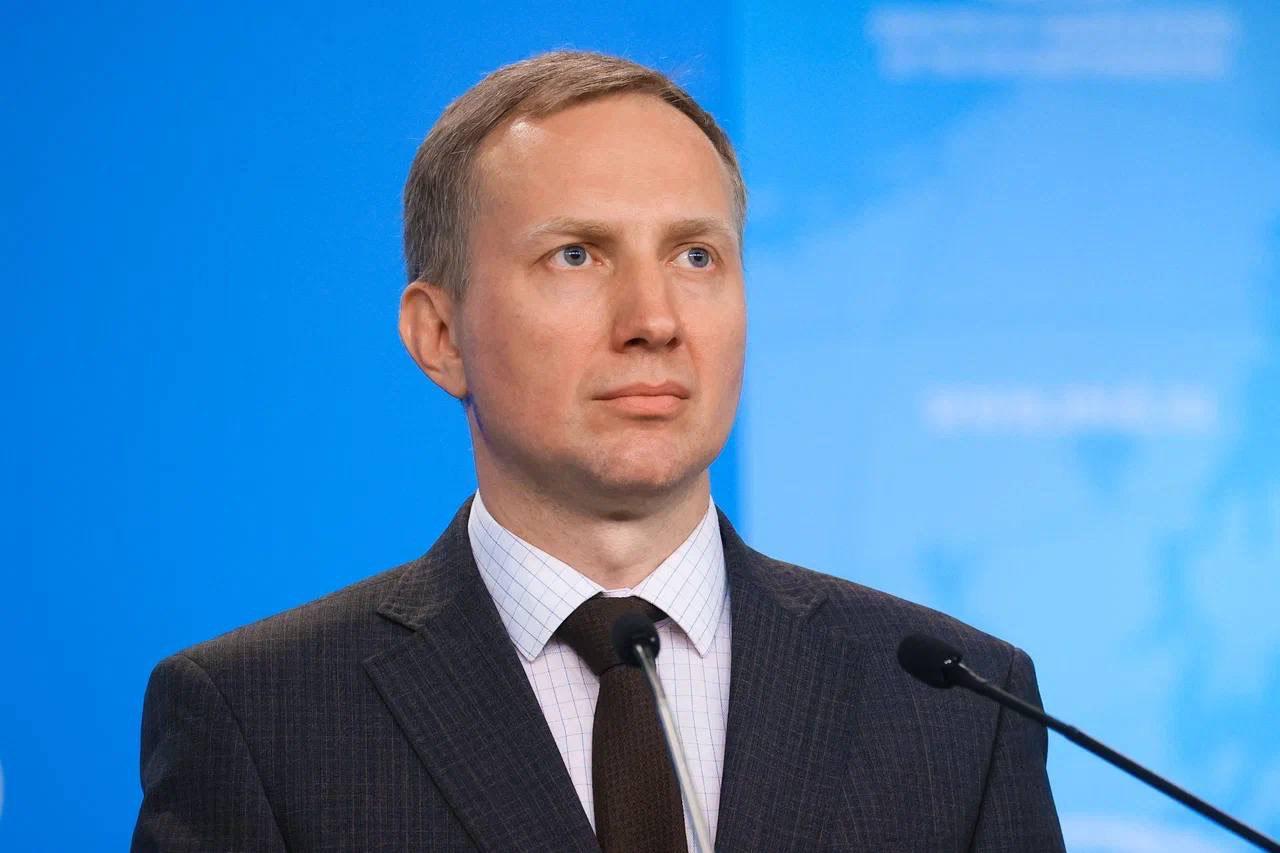
In response to several questions from NOA.al, the Russian Ambassador to Albania, Alexey Zaytsev, spoke about recent developments and analyzed the situation from the Russian side regarding relations with Albania.
The ambassador also answered questions on why the relationship between the two countries has reached this level, offering his assessment of the current political and economic ties.
Below are Ambassador Alexey Zaytsev’s responses to the questions from NOA.al:
—
NOA.al: On October 21 this year, Albania’s Prime Minister Edi Rama said during an international conference in London that since 1960, no senior Russian official has visited Albania and vice versa — no Albanian official has visited Russia. How accurate is this statement?
Ambassador Alexey Zaytsev: After the re-establishment of diplomatic relations in 1990, which had been suspended in 1961 due to political disagreements, Moscow and Tirana took the necessary steps to restart political, diplomatic, trade, and economic cooperation between the two countries.
The process of updating the legal framework of relations was developing quite actively, covering a wide range of fields including culture, education, tourism, healthcare, and transport.
Throughout the 1990s and 2000s, numerous visits took place between government and parliamentary representatives of both countries. For example, in July 1991, at the invitation of the Supreme Soviet of the USSR, the Speaker of the Albanian Parliament, Kastriot Islami, paid an official visit to Moscow.
In October 1992, the Chairman of the Supreme Council of the Russian Federation, R.I. Khasbulatov, made an official visit to Albania.
In April 1995, Albania’s Prime Minister Aleksandër Meksi paid an official visit to Russia. The following month, Albania’s President Sali Berisha attended the commemorative events in Moscow marking the 50th anniversary of the Victory over Fascism.
In March 1999, a delegation of the State Duma of the Federal Assembly of Russia, headed by Deputy Chairman S.N. Baburin, visited Tirana. The delegation held talks with Albania’s Parliament Speaker Skënder Gjinushi, and was also received by President Rexhep Mejdani and Prime Minister Pandeli Majko.
From October 14–16, 2002, a Russian State Duma delegation led by Deputy Chairman V.V. Zhirinovsky participated in a parliamentary conference in Tirana, held under the Stability Pact for South Eastern Europe, during which contacts with Albanian parliamentarians were also made.
During the 60th anniversary of Victory Day in May 2005, Albania’s President Alfred Moisiu visited Moscow. As a participant in the anti-fascist resistance, he was decorated by Russian President Vladimir Putin with a jubilee medal.
The foreign ministries of both countries maintained regular working contacts, and inter-ministerial consultations were held annually on various issues.
In December 1997, Albania’s Foreign Minister Paskal Milo paid a working visit to Russia.
In December 2002, Albania’s Deputy Prime Minister and Foreign Minister Ilir Meta also visited Moscow.
In December 2004, Russia’s Foreign Minister Sergei Lavrov made a working visit to Tirana, during which the Treaty of Friendship and Cooperation between the two countries was initialed.
A significant humanitarian and spiritual event took place in April 2018, when Patriarch Kirill of Moscow and All Russia visited Albania at the invitation of the Head of the Autocephalous Orthodox Church of Albania, Archbishop Anastasios. During the visit, he met with President Ilir Meta, Prime Minister Edi Rama, and leaders of Albania’s religious communities.
In February 2020, Edi Rama visited Moscow in his capacity as OSCE Chairperson-in-Office.
Since then, no high-level contacts between Russia and Albania have taken place, though working-level communications have continued.
—
NOA.al: What is the current state of political relations between Russia and Albania?
Ambassador Zaytsev: It must be acknowledged that bilateral Russian–Albanian relations are currently at a “low profile” — but not due to our fault. This was the choice made in Tirana. On the international stage, Albania firmly and unwaveringly adheres to Euro-Atlantic principles, consistently joining all anti-Russian sanctions, which naturally harms our ties.
Since the beginning of the special military operation in February 2022, the Albanian government has adopted a policy of supporting the Kyiv regime politically, diplomatically, militarily, economically, and humanitarily — as well as in international platforms such as the UN, OSCE, and PACE.
In 2022–2023, as a non-permanent member of the UN Security Council, Albania co-sponsored the so-called “Ukrainian dossier,” actively demonstrating solidarity with Ukraine and Western policies.
Unfortunately, Russia’s initiatives for developing cultural and humanitarian cooperation have not been supported here, even though, as Prime Minister Edi Rama has repeatedly stated, Russian culture is appreciated and loved in Albania. This is evident from our contacts with Albanians, especially the older generation who studied in Soviet and Russian universities.
We use the embassy’s social media to promote Russian culture and regularly screen contemporary Russian films in Tirana cinemas.
—
NOA.al: How are things going in the economic field? Are there any joint projects or prospects for trade and investment?
Ambassador Zaytsev: Trade and economic relations between our countries are not going through their best times. Political factors and the illegal Western sanctions — supported by the Albanian government — have negatively affected bilateral trade.
In 2024, trade volume fell to $42 million, of which over 99% were Russian exports. According to data from Albania’s Institute of Statistics (INSTAT), the main goods imported from Russia in 2024 were grain (approx. $32 million), fertilizers ($10 million), as well as glass, oils, and timber. Russian goods mainly arrive through intermediaries and as a result of contracts concluded on international commodity exchanges.
In 1992, both sides agreed to establish the Intergovernmental Commission for Trade, Economic, Scientific, and Technical Cooperation. Its last meeting took place in April 2019. Should the Albanian side express interest, this body could serve as a platform to advance mutually beneficial cooperation.
Let me emphasize: Russia has never been the initiator of the cooling of relations with Albania, nor has it avoided dialogue with Tirana — even on issues where our positions diverge significantly. Russia remains open to pragmatic cooperation and constructive dialogue with all countries willing to consider Russian interests, rather than simply impose their own.
/NOA.al
