

Të dhënat po ngarkohen...



Albania was on the way up in the past year. For a long time, the country has been striving for European Union candidate status and the opening of membership negotiations. It almost seemed within reach, if not this December, then in the coming spring. The European Commission gave Albania a list of 12 items of homework to complete before it would recommend candidate status. Government and parliament energetically started working on these, and had only three more pieces of legislation to pass.
The best thing about it was that coalition politicians, led by Prime Minister Sali Berisha, and opposition politicians, led by Socialist leader Edi Rama, seemed to have started cooperating. For years, the greatest worry of EU officials and politicians had been the political climate in Albania, with both sides taking turns accusing each other of election fraud and corruption, boycotting parliament, going on hunger strike, leading demonstrations, voting against everything the other proposed, slinging mud in the press and other strategies not quite helpful to responsible cooperation in a mature parliamentary democracy. After years of political stalemate caused by this, the leading parties came to an agreement in November 2011. Political life and parliamentary work resumed more or less normally; debates were held, decisions were passed, steps were taken.
Things seem to be unravelling now, just a year after the agreement. There are a couple of signs, and they are not good. Albania had three items of homework left, three laws to pass, but parliament failed to pass them. They required a three-fifths majority, for which both coalition and opposition were needed. Opposition forces refused to vote in favour because of a power struggle about an entirely unrelated issue. The power struggle was obviously considered more important than the European agenda. The Albanian parliament thus gave EU member states, some of whom were reluctant to grant candidate status to begin with, a perfectly legitimate reason to postpone the decision.
In the press, Berisha announced that all ethnic Albanians would have a right to an Albanian passport, to show himself a great patriot. Outcry in the region, especially from countries with large Albanian populations, followed predictably and immediately. Berisha later claimed his remarks were made "in a historical context" and were wrongly interpreted. Not a very credible excuse. Berisha has been a politician for far too long not to have known exactly what the effect of his remarks would be. So: no brownie points for regional cooperation.
On December 20, I was supposed to be in Albania with our inter-parliamentary delegation. In this format, a delegation from the European Parliament has two days of debate with a delegation from the Albanian parliament about the situation in the country and the state of play of the accession process. This was not always easy. We have had delegation meetings where all of us from the EU parliament lost our tempers in turn out of sheer frustration with the lack of even the willingness to cooperate on the minutest things between opposition and coalition.
Most delegation meetings ended without a common statement, because the Albanian delegation could not agree on anything. This seemed to have changed for the better in the last year too. An agreement was reached on a statement, an actual debate was held on important topics like the economy, unemployment, combating organised crime and corruption. Now, the delegation meeting in Tirana was cancelled at the very last moment. The Albanian chair of their delegation had to cancel because none of the members of parliament were interested to be there. It could just be that they were looking forward to holidays. But if I was an Albanian MP and I wanted to take a next step in accession, I would make sure I was there.
Perhaps I am wrong. Perhaps coalition and opposition politicians will come back from their holidays well-rested, eager and ready to resume cooperation to bring Albania further in its reform and accession process. But somehow, I doubt it. What I fear is that the election campaign for the general elections in June 2013 has already started in earnest, and that there will be not much sensible thought in Albanian politics until long after the elections have happened.
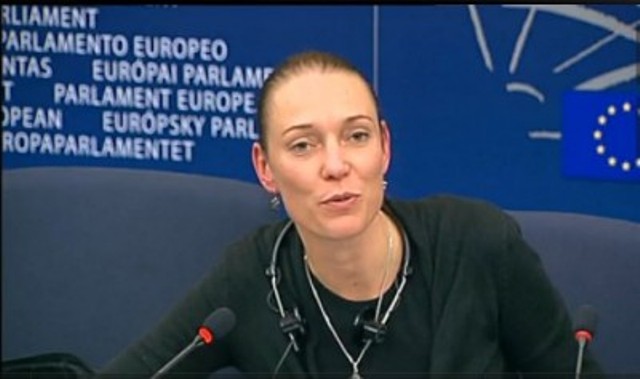
Marije Cornelissen MEP is a member of the Greens/European Free Alliance group in the European Parliament
