

Të dhënat po ngarkohen...



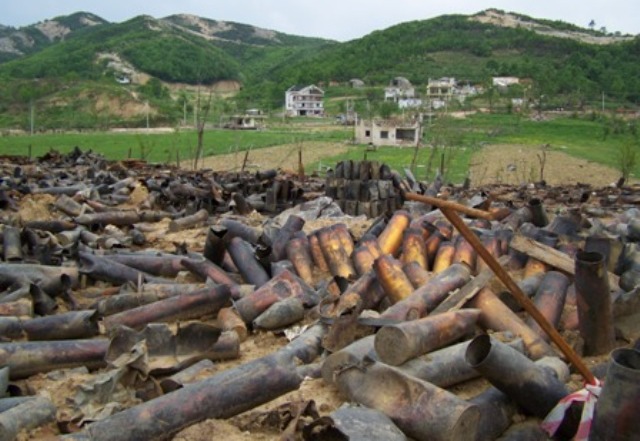
Washington, DC, December 20, 2012 NOA.al – The Department of State successfully concluded a $14.5 million program to support Albania as it works to clear safely the site of a deadly 2008 munitions explosion. The program removed 3,085 tons of unexploded ordnance and 146,500 pieces of dangerous munitions.
The March 15, 2008 explosions at a former military base in Gërdec resulted in 26 deaths and over 300 people injured, and forced more than 700 families from their homes. Unexploded ordnance was thrown several kilometers from the blast epicenter, posing lingering hazards to emergency responders and complicating recovery efforts. This tragedy highlights the challenges posed by old, unstable Cold War-era munitions, and the need for governments to properly maintain and dispose of excess arms inventories.
At the request of Albanian authorities, the United States offered assistance and arranged for an expert assessment followed by the clearance of unexploded artillery shells, mortar shells, and other munitions. For nearly five years, technical experts from ITF Enhancing Human Security, Sterling International, and EOD Solutions funded by the Office of Weapons Removal and Abatement in the Bureau of Political-Military Affairs trained and supervised local Albanian workers who cleared 257 acres of unexploded munitions up to 8 meters deep, including giant craters caused by the massive explosions.
The teams recovered over 734 tons of metal from munitions and other blast debris and turned this scrap, worth millions of dollars, over to the Albanian Ministry of Defense. In addition, thousands of dollars worth of equipment used at Gërdec is being donated by the United States to the Albanian Mine and Munitions Coordination Office to continue clearance at former military sites throughout the country. Parts of Gërdec remain contaminated and, as with any munitions incident of this magnitude, it is likely that explosives will continue to be found at the site for the foreseeable future as deep-buried munitions work their way to the surface.
The U.S. has assisted GOA’s efforts to destroy their immense communist era stockpiles of weapons and munitions since 2000. Initial humanitarian support efforts focused on landmine clearance and mine survivors assistance, followed by small arms and light weapons destruction programs in 2001. By 2009, additional programs to remove all MANPADs and chemicals weapons allowed the GOA to declare Albania mine and chemical weapon free. In addition to the Gërdec cleanup, the USG is currently assisting with Albania’s industrial demilitarization program through a grant to the NATO Support Agency (NSPA). The U.S. has donated USD 6 million over three years to NSPA to assist with demilitarization and upgrades at ULP Mjekës.
The U.S. is the largest international donor to Albania’s industrial demilitarization program and has spent approximately USD 100 million on demilitarization efforts in Albania through both the Department of State (PM/WRA) and Defense Department (Defense Threat Reduction Agency, DTRA) programs. a.b/noa.al
