

Të dhënat po ngarkohen...



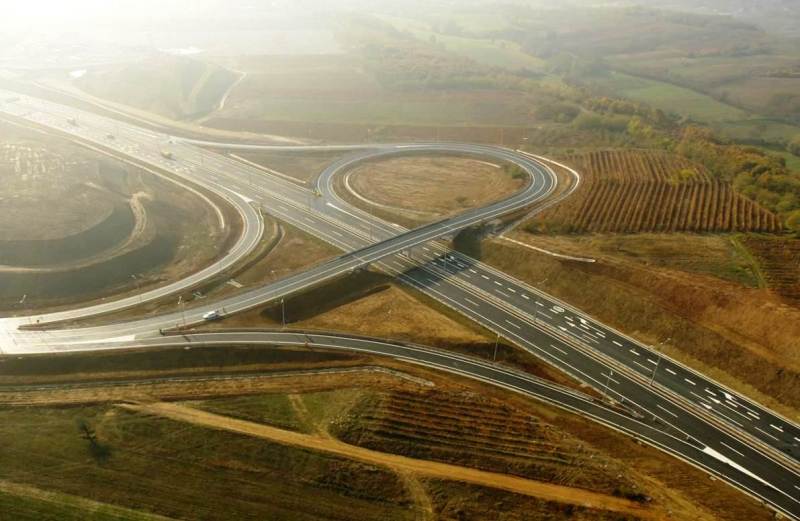


Morine Merdare Motorway – A Great motorway in Kosovo. Hill International: “We foresee a huge development potential in Albania”
Interview for NOA.al – Albania National News Agency, of Frank Peter Sockett -Vice President PM Group Europe-CIS Countries, talking about Route 7 Morine – Merdare Motorway
Please, advise the current position on your contract for the supervision of works for the Merdare-Morine highway? Your observations of the works on this project to date, and a prediction about their future.
Hill International was appointed, by the Ministry of Infrastructure [MoI] of the Government of Kosovo, to provide Construction Supervision & Management Services in August 2011, and started the contract on 1st September 2011.
The Construction Works contract for the Route 7 Motorway from Morine, on the Kosovo / Albanian border, to just north of Pristina, some 89km, had been awarded in April 2011 to the joint venture of Bechtel Enka General Partnership [BEGP].
The construction programme is divided into 8 sections, which are instructed individually depending upon the final design quantities, with completed sectional value checked against estimated target cost.
The motorway is designed, on behalf of MoI, by the consultants IGH [from Croatia], for Sections 1, 2, 3 & 7, and Egis [from France] for Sections 4, 5, 8& 9. Section 6 is being constructed under a separate contract awarded by MoI. Design management, incorporating value engineering is employed to ensure the cost of the Section remains within the tender value.
Prior to Hill International being appointed, MoI had been responsible for construction supervision, and is the FIDIC Engineer for Sections 1 – 4. Hill International has been delegated the FIDIC Engineer position for the remaining Sections.
Hill International is pleased to confirm that the first 38km of the motorway was completed and accepted by MoI for opening in November 2011. This section of motorway enabled the heavy goods traffic, and all through traffic, to avoid local traffic through the towns and villages in south-west Kosovo, which gave a significant improvement in safety on the existing M25 road through last winter. The Contractor is to be congratulated as this 38 km was completed in some 18 months, whereas the original contract programme was for 29 months.
A further section of some 4 km will be opened next month [July 2012] so that the summer tourist traffic will avoid a tortuous section of road where the M25 descends to mountains to the rolling plains of South West of Kosovo. This 42 km of motorway alone is anticipated to reduce summer peak period travel time through this sector by almost an hour.
The Contractor is programming to complete a further 18 km section, to enable the motorway to join the upgraded M9 Pristina – Peja regional road, Section 6 of Route 7 works, in November this year. When this is achieved there will be a dual two lane road {M9] and motorway [Sections 1-5] from Pristina to the Kosovo Albanian border, and the overall works programme will have been constructed in 34 months rather than the planed 57 months.
The remaining three sections [7, 8 & 9] of the present Route 7 contract are presently under design in anticipation that construction may commence this year with a planned completion by the end of 2013.
Hill International understands at the end of this year the then completed Route 7 motorway, with the recently completed motorway in Albania, will reduce the journey time from Pristina to Tirana by some 21/2 hours, and in consequence bringing the coast of Albania closer to the interior of Eastern Europe.
What are your actual relationships with the contractor of this project, and with the Kosovo’s government -the Contracting Authority?
Hill International has been commissioned by Ministry of Infrastructure [MoI], of Government of Kosovo to supervise the construction work of the Contractor, Bechtel Enka [BEGP], and to support MoI in managing the construction and design contracts. Hill International is the FIDIC Engineer for Section 5 onwards, with MoI the FIDIC Engineer for Sections 1 – 4.
Hill International works closely with MoI Motorway Department and Technical Committee in managing the Contract, in the supervision tasks and in the delivery of completed Sections to MoI for incorporation into their highway networks, and maintenance and operation programme.
MoI is responsible for approval of the design, which is prepared by the two design companies, IGH and Egis, with BEGP involved in value engineering to optimize the solutions. Designs are presented for approval to MoI’s Design Liaison Group.
What is your assessment about this highway, as you see it in relation to the overall regional infrastructure, assessing its main parameters, geo-strategic position and predictability on the links that will realizes, between Albania and other regional countries?
The Route 7 motorway is providing a strategic link from the Albania ports on the Adriatic Sea with the land locked Balkans countries, and through the motorway network to Eastern Europe, and North West to Europe and east to Turkey.
The motorway cross section, with dual two lanes, and a balanced approach to design speed, geometry and cost is very well planned and providing a safe corridor for traffic. The motorway generally follows the rolling nature of the land and is thoughtfully designed to provide an attractive route for drivers and passengers. In the mountainous sections design speeds have been adjusted accordingly and as necessary to minimize, as much as possible the depth of the motorway cuttings and the height of embankments, however, some spectacular views remain.
The motorway is already, after its initial partial opening, providing appreciable traffic relief to the towns and villages in South West Kosovo. For the drivers it is providing a congestion free route around these towns and villages and providing a quicker access between Pristina and Tirana, and regionally linking the Adriatic coast of Albania to the Balkans and Eastern Europe. The motorway corridor will undoubtedly be a catalyst to bring development, to these previously largely agricultural areas, whilst stimulating the national economies of both Kosovo and Albania, and may help to trigger growth throughout the region.
Already the construction alone has brought employment, with some 70% of the present labour force of 2,600 being locally recruited. 80% of the sub-contractors are from Kosovo and 50% of all material procurement is from or through Kosovo.
The key indicators, that you have been able to ascertain during the supervision of the works on this motorway, the quality of these works as well as the observance of the time-limits by contractors?
The works have been designed to the Croatian standard specification, using Euro codes and standards. Our supervisors are inspecting and testing the works based on these standards.
The contractor is achieving high levels of construction output through the use of 7 day per week working and extended shifts each day, or 24 hour working, as necessary. In addition they also have some 1,000 major items of equipment on site, including stone crushing plant, asphalt batching plants, concrete batching plant and pre-cast concrete manufacturing plant for U bean fabrication.
BEGP have an extensive quality assurance [QA] system and procedures with laboratories on-site and sub-contract material mix design facilities off-site. We are undertaking audit testing in our own laboratory to verify the accuracy of the contractors’ testing.
The key indicators to quality production are:
Detailed works methodologies, material design mixes and comprehensive materials testing,
Thorough construction schedules with link connections and critical path planning.
Fully equipped construction activities with sufficient manpower resources.
Good management.
Secure cash flow against completed works.
Our tasks require the monitoring of these five elements on a daily basis and to alert the Ministry where issues outside the contractors’ direct control could influence progress. There can be no relaxation on quality.
Can you tell us the most important regional projects, in which your company has participated, in the neighbouring countries in the Balkans, Bulgaria, FYROM etc., and predictions for the future of your engagement in this region?
Hill International has been operating in Eastern Europe now for almost 15 years and has been involved in the full project cycle from technical assistance projects, feasibility study into design, and procurement to contract award and construction supervision to project handover. During this period we have worked extensively on projects designed to improve the environment, from solid waste management systems to wastewater treatment plants, foul / storm water /water supply networks and road and highway projects, for rehabilitation of existing roads to new highways and by-passes. In addition we have extensive experience of building projects for rehabilitation of schools to new build schools, hospitals, hotels, office towers and shopping malls.
These contracts have been awarded under many different forms of contract, FIDIC / EU / World Bank / National, for both works designed by, or on behalf of, the Employer and by the Contractor, a form of contract which has been popular in the last 5 years or so in this region.
Of particular relevance is our highway portfolio which includes:
Bulgaria – the upgrading of three sections of National Roads and one section of Motorway, with total construction budget of € 34 mil.
Romania – the upgrading of some 215km of National Roads in Central Romania with a cost of € 90 mil and the construction of a new 23km highway to bypass Constanta, at a cost of € 150 m.
Serbia – the upgrading of 13 no. of tunnels on arterial M-1.12 (E-80) Road in SicvackaKlisura, and the construction of a new tunnel (about 600m long) at OvcarBanja.
Serbia – 4 years of Technical Assistance support to Roads of Serbia Project Implementation Unit in the management of design, procurement and supervision of their Motorway and National Road programme, which include new works as well as rehabilitation of both highways and major motorway bridges.
Overall, how would you rate our region, a comment about its reality in infrastructure’s sector, as well as the prospect that it appeared for the future, regarding this sector.
The Balkans has for many years been the forgotten corner of Europe which was torn apart by civil conflict and wars. With the peace has emerged a region intent on developing a 21st Century infrastructure so that it may take its rightful place in the development of Europe.
Throughout this period has appeared to be constrained by problems of others and unable to maximize the potential of its Ports and skilled resources to service Eastern Europe and deprived of an opportunity to develop its tourist potential due to natural obstructions, mountains, and a lack of a good highway infrastructure. First the Albanian motorway and now the Route 7 Motorway in Kosovo is removing that blockage and we are anticipating a fast and sustainable development programme in Albania as a result.
We foresee a huge development potential in Albania and Hill International plans to be a major player in assisting both government and the private sector in achieving their goals.
How you know about Albania and its infrastructure and how Hill International could work with the Government of Albania to promote sustainable developments? What can you tell us about it, since you are actually supervised a road project in Kosovo, which in fact is its continuation of the important axis Durres-Kukes?
Hill International has been tracking developments in the Balkans throughout the last 15 years, whilst developing our business in Eastern Europe. We believe the experiences gained in Eastern Europe, and Romania and Bulgaria in particular, are very relevant to the development we anticipate will be required in Albania.
The programmes we believe will be specifically relevant include:
Upgrading of infrastructure in the cities, towns and villages – including water supply, waste water treatment, provision of sewer networks and the construction of drainage protection works;
Improvement of the road infrastructure as a catalyst to open areas for development – including up-grading roads to reduce journey times and to improve safety, provision of bypasses to take heavy vehicles and through traffic from population centres and so improving the environment for drivers and residents alike, and the construction of major high-speed motorways to connect areas of development and other countries to the ports and manufacturing potential of Albania;
Provision of improved educational facilities by upgrading schools to make them more attractive places in which to learn and through energy saving schemes to be more energy efficient;
Provision of improvement medical infrastructures through the construction of clinics and hospitals, with in parallel a phased rehabilitation of the existing facilities;
and with this infrastructure improvement will following
Private development, shopping malls, hotels and offices.
Hill International wants to be there to help Albania with this programme and together to improve your connection and influence, not only in the Balkans, but in Europe.
"Hill International" is recognized as one of the largest companies in managing and supervising the construction. Can you give us some information about its objectives, as well as the strategies by which you will accomplish this process? What are the “secrets” of your efficiency at your works?
Let me start by answering your last question first. There are no “secrets” to success there is just hard work structured on the principle of wanting to provide the best of service to your client, no matter how big or small the project or task. Hill International will bring internationally proven project management procedures to each and every project. We will provide support and training to your staff, as Hill International understands that the best projects are those achieve by joint client / consultant teams structured in the best interest of the project.
In recognition that project management is a people driven process we will bring highly educated and experienced personnel to our projects, but with the essential desire to achieve success through listening to our clients, working with our clients to identifying the targets, then through best practice to assure the project target is achieved and the client’s team has had the opportunity to learn and develop as part of the process.
Hill International has an expression – if you can IMAGINE it we can MANAGE it and we look forward of the opportunity to do that together. e.n/e.l/a.y/noa.al
