



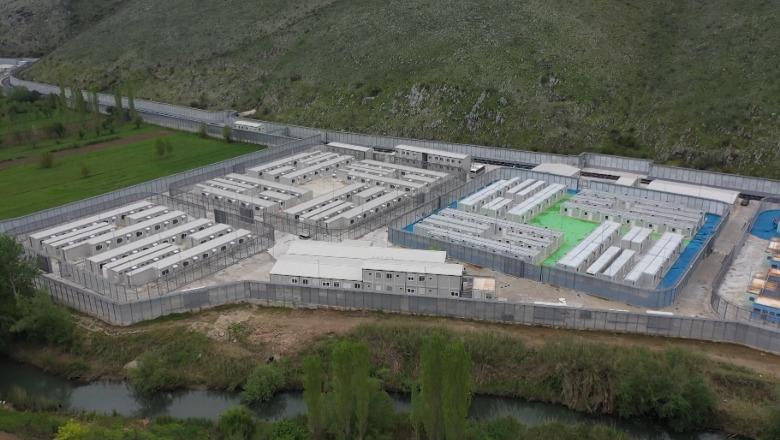
Rome – Italy’s Court of Cassation has reversed its stance on the controversial Italy–Albania migration deal and has now referred the matter to the European Court of Justice (ECJ) in Luxembourg. The decision casts legal uncertainty over the migrant reception center in Gjadër, Albania, and the broader framework of the agreement between Rome and Tirana.
This marks the first time that the ECJ is being asked to assess the compliance of an asylum system located outside the EU’s borders with Union law.
The referral to the European judges was made yesterday in the form of two preliminary questions, signaling a significant shift from the position expressed in Italy’s previous ruling No. 17150, issued on May 8. The Court of Cassation has expressed doubts about whether the so-called "Albania operation" — which treats the Gjadër facility as equivalent to Italy’s internal repatriation centers — truly meets the EU’s fundamental rights and legal guarantees.
Although the full reasoning behind the Cassation Court’s decision will be made public in the coming days, the ruling already represents a major development that could create legal division within the Italian judiciary itself. Until the ECJ provides clarification, it is unlikely that lower courts will approve the detention of migrants in Albanian facilities.
What was the Court of Cassation asked to decide?
The case involved two recent rulings by the First Criminal Section of the Cassation Court (presided over by Judge Giuseppe De Marzo, with Daniele Cappuccio and Carmine Russo as rapporteurs). These rulings addressed appeals filed by Italy’s Ministry of the Interior in relation to two migrants who had been detained in Albania and had applied for international protection. The Court of Appeals in Rome had refused to authorize their detention, prompting the ministry to escalate the case.
Now, the Court of Cassation has effectively paused all proceedings and submitted two key questions to the ECJ:
1. Do the Italy–Albania agreements comply with EU directives, particularly the 2008/115 Return Directive? The concern is whether detention without a “foreseeable prospect” of repatriation violates EU rules.
2. Do the agreements safeguard the right of asylum seekers to remain in the country where they request protection, as established under Article 9 of the EU Qualification Directive?
The core of the legal issue lies in the fact that Albania is not part of Italian territory, raising questions about the applicability of European legal protections in a third country.
The case adds new pressure on the Italian government, especially as the entire legal framework of the migrant transfer agreement with Albania now faces scrutiny at the EU level. The outcome could set an important precedent for any future offshore asylum arrangements involving EU member states. /noa.al