



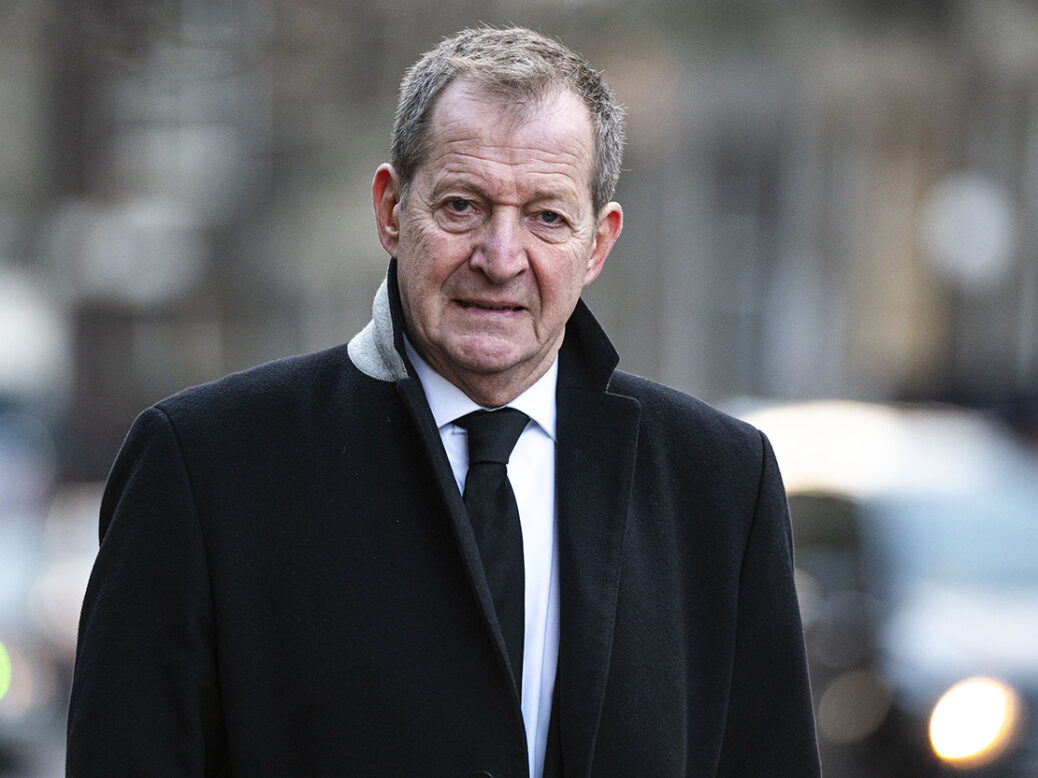
Unfortunately for Albania’s Prime Minister, Edi Rama, the country will not gain entry into the European Union through appearances or perceptions, but through its democratic standards – and right now, those are being tested
By Alastair Campbell
I have been visiting Albania regularly for the past 14 years. This lasting relationship began when Rama, then leader of the opposition, had just lost an election he claimed was rigged, and he asked me to help design the strategy for the next one.
He won convincingly and became prime minister in 2013. Now, in May 2025, he has just secured his fourth term in office – an impressive achievement for any leader in today’s democratic world.
The celebrations had barely ended when Rama hosted the most recent European Political Community (EPC) Summit in Tirana – a clear sign that Albania had carved out a place for itself on the international stage.
Emmanuel Macron, Friedrich Merz, Keir Starmer, Recep Tayyip Erdoğan, Volodymyr Zelensky, Giorgia Meloni, Ursula von der Leyen… all key European figures came to a country many of them had avoided for decades. In fact, Starmer became the first sitting British Prime Minister ever to visit.
Standing nearly two meters tall, Rama dominated the event – physically and politically. The confidence of both the man and his country was palpable. Forty-seven European leaders arrived at the fastest-growing airport in Europe, where they were greeted by an AI-generated video showing each one of them – as children – saying “Welcome to Albania.” Even Erdoğan cracked a smile.
The summit venue had been custom-built and adorned with wallpaper inspired by Rama’s own pen-and-ink drawings, a habit from his former life as an artist. One of those drawings, I’m pleased to say, depicted me – riding into battle on a horse, with a sword in one hand and a phone in the other.
The entire event sent a clear message: Albania is no longer just asking for a seat at the table – it is ready to build the table itself. The prospect of EU membership by 2030 feels real and significant, not just for Albania but for Europe as a whole, as enlargement promises greater security and deeper cooperation against instability in the Western Balkans and the threat of Russian interference.
But EU membership is not earned through ambition alone. It requires democratic values, reform, and above all, the rule of law. And it is precisely here that tensions arise. Albania has made real strides in justice reform, necessary to repair its reputation long tarnished by corruption.
The creation of SPAK – the Special Anti-Corruption Structure – was a historic step. Backed by the EU and the US, SPAK operates independently from the government and has delivered dramatic results: senior officials, ministers, and MPs have been indicted. SPAK has made it clear – corruption will no longer go unpunished.
But with power comes responsibility; and with judicial power, the responsibility is even greater – to act with fairness, proportionality, and transparency. This is why what is happening with the Mayor of Tirana, Erion Veliaj, should concern us all.
I’ve known Veliaj as long as I’ve known Rama. A fellow Socialist Party member and former collaborator of the Prime Minister, he is widely seen as a potential successor. According to SPAK, he allegedly led a complex scheme of bribery and money laundering through a network of NGOs and companies controlled by his wife and brother. If true, it is a scandal – and he deserves punishment.
But only if it’s true. He has now spent more than 100 days in pre-trial detention, without formal charges, without being told exactly what he is accused of, all while remaining Mayor and expected to continue running the capital city. This comes from SPAK – the very institution meant to protect the rule of law, not undermine it. Justice reform must not become injustice. The fight against corruption must not become a pretext for arbitrary action.
The European Union must not look the other way. If the accession process means anything, it must uphold the values on which the Union is built: due process, judicial integrity, human rights. No official, regardless of status, should be immune from investigation. But no citizen – however prominent – should be held without charge or outside legal procedure. Not in a democracy. Not in a country aspiring to join Europe.
What we saw at the EPC Summit was a country confidently displaying its European credentials. But Albania will not win its place in the EU through performances or fiery speeches – only through the substance of its democratic institutions. And that substance is now being tested.
It’s time for clarity – from Brussels, from member states, from all who care about Europe’s future. Arbitrary detention has no place in a European democracy. And if Albania hopes to join the EU – a goal it has every right to pursue – then it, and the institutions overseeing its modernization and accession process, must abide by the rules of the club, not just its politics. Because in the end, the rule of law is not a box to tick. It is the very foundation upon which everything else must be built.
Photo: Getty Images